Dear experts,
In our company’s workplace, adjustable seats were used. When the electrodes were placed normally, the impedance test between the seat and the ground failed. However, when people sat on the seat with a heavy weight and their feet off the ground, when electrodes were placed on the seat and the floor respectively, the measured grounding impedance was within the acceptable range. Is this testing method feasible?Looking forward to your reply. Thanks
1 Like
Greetings of the day from India to all the members on this forum and welcome to Mr. Yangyang 
Well, unlike STM 97.1 for footwear -flooring system resistance test in combination with personnel, the ESD seating system test method STM 12.1 does not have provision to measure the system resistance.
At times due to the convex or concave surface structure of the seat & back based on the type of foam used below the upholstery this kind of contact problem with the electrode base to the surface under test does occur.
If you could please share few photos of your chair’s seat and back, it would clear that confusion.,
However, in my opinion by keeping an Aluminum foil piece ( slightly bigger in size to the base of the electrode) on the surface under test and keeping the electrode in contact with that you can try out the point ground test. I hope you would get the required pass result .
But however this procedure is to be discussed with ESDA experts in the Forum who are on the Standards Development Working Group .
I look forward to our ESDA experts opinion as this question is of practical issue in many cases.
Thank You .
1 Like
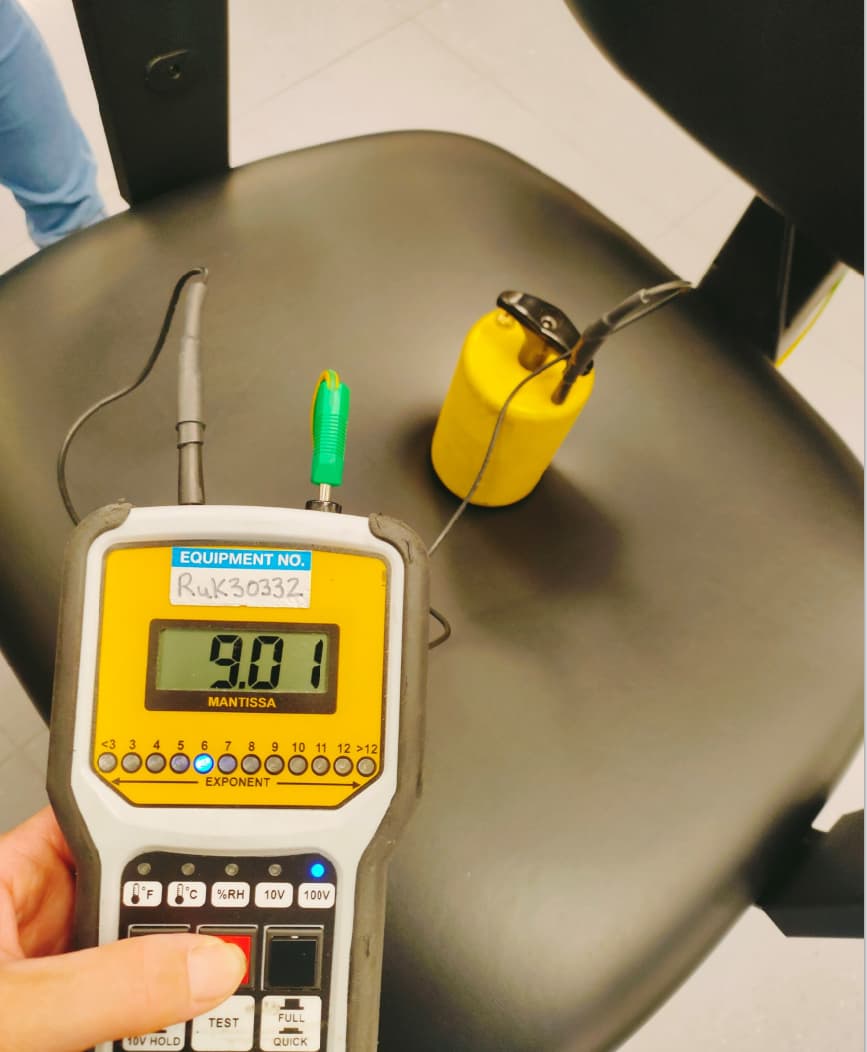
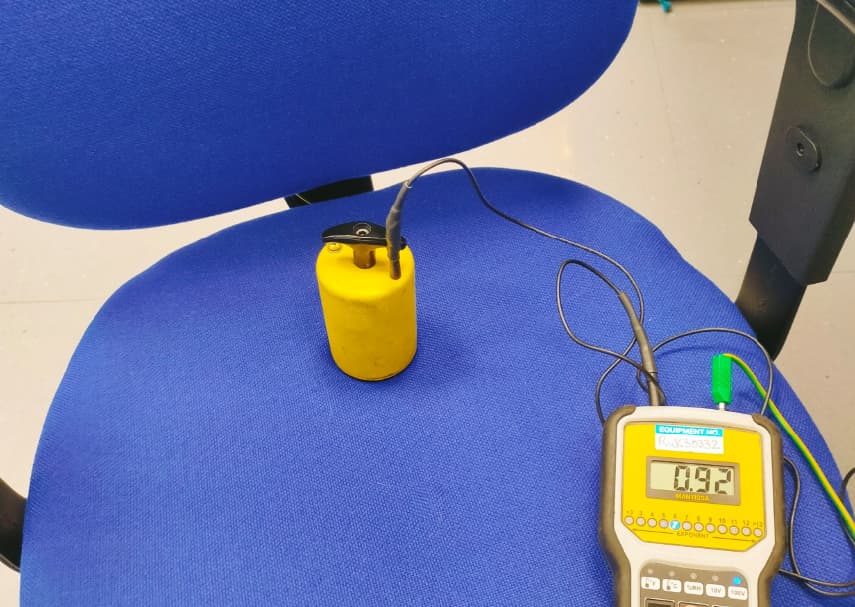
Hello, we also often have chair test issues. The designs of chairs can influence it greatly. When brand new often less of an issue. Dirty casters can cause quite an issue. A little more weight to provide a good contact, often prevails, definitely the conductive pads are a must. I haven’t tried foil before esdtekniks.
1 Like
Greetings of the day from India to all the members on the forum.
Susan Madam , even I have never used or come across such situation to use an aluminum foil support below the conductive rubber pads. But it was only my alternate views and needs to be checked with experts .
Normally, in the photo you have shown it is ok and is the normal shape of the seat which will allow proper contact with the electrodes base .
The provision for additional weight is not made in stm 12.1 unlike for the footwear test in stm 9.1 if these electrodes are used instead of metal shot bags . Thus; it becomes a debating point here .
Thank you
1 Like
Foil was used before the rubber electrodes. It was first defined in NFPA 77. At the time they were good enough. The rubber electrodes were a modification of the original electrodes which gave better results and allowed for measurements at 10 and 100 volts.
For complinace verification using extra weight. To do this would require a tailoring statement in your ESD control plan. I would think the technical justification would be that a chair has a person sitting in it to provide more weight. The actual extra weight would need to be documented.
2 Likes
Greetings of the day from India to all the members on the forum.
Thank you JK Sir for the clarification 
Thank you to all the experts for your clarifications.