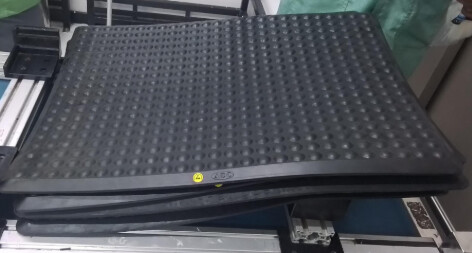
We are using ESD anti-fatigue floor mats at a few standing workstations. However, after continuous use for approximately one year, the point-to-ground resistance of some mats has increased to >10⁹Ω which is not acceptable as per our ESD requirements.
If we see physical condition of these mats which is good, however, due to the high resistance readings, we are currently scrapping them.
Could you please suggest whether there is any method to improve or restore the point-to-ground resistance of these existing mats without providing external ground wire connection? This would help us reduce replacement costs and avoid recurring ESD-related concerns.
Cleaning?
I cannot see botom surface - but there could be any problem. I think the mat is laying onto any kind of the floor, is good conductive any time?
Greetings of the day from India to all the members on the forum
Mr. Rahul ,
I would wish to have following few inputs if you can.
Can you please share the data sheet of the item under question orpreferablydetailedPQ report which you must have got either from the supplier or from a third party or from your own IQC lab before it was put into use in your EPA.
2.Was it supplied as an Anti fatigue ESD or ESC mat ?
Are you using them on a normal floor or a grounded ESD floor at the standing work station?
4.What is the P-P resistance of top and bottom layers ?
5.What is the usual average Rh% and the temperature maintained in the area where the ESD safe work station is positioned ?
6.What is the overall thickness of the mat ?
Are there any grounding rivets or buttons from top to the bottom layer ?
Are the footwear your are using to stand on this mats have got PQ pass report and have you checked the Footwear- Flooring system resistance in combination with the personnel per ANSI ESD STM 97.1 and the walking voltage per ANSI ESD 97.2 ?
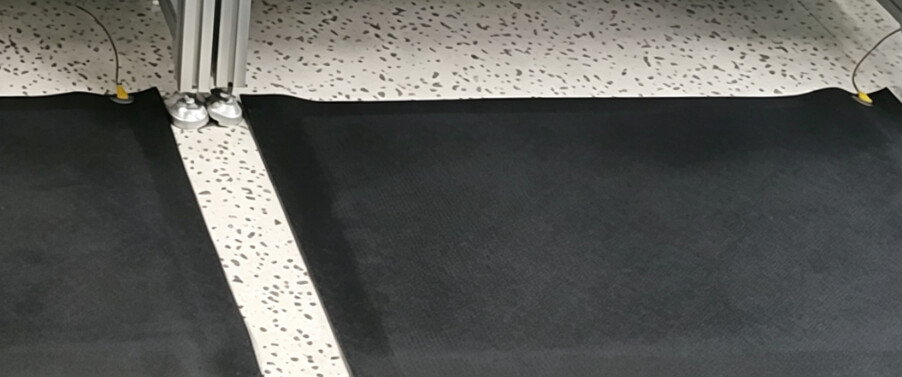
Can you please share a clear picture of the work station and the positioning of the anti fatigue ESD safe floor mat ?
However; following are few suggestions that you may try out and please put in your comments.
In the event you are using it on an ESD safe grounded floor , try with one mat putting a 35 micron thick x 12 or 18 mm width copper foil network below the mat connected through rivets or grounding buttons from the top layer at all the four corners.
1.a If your work stations chassis are properly grounded then from one corner of the anti fatigue ESD floor mat connect it to the chassis with a small length of 6 mm dia grounding wire or even with a copper foil strip at an invisible corner not disturbing with your foot movement
Ensure no dust and dirt collection below the anti fatigue mat.
3.Ensure to use regularly water soluble ESD surface cleaner both on the base floor (if ESD safe and grounded) and the top of the anti fatigue ESD floor mat . Regular surface cleaning of any work surface or floor is very essential ( with water soluble ESD safe cleaner only but not with any normal commercial surface cleaning solutions available in the market ).
Ensure that the footwear is also regularly cleaned on parallel terms above .
Ensure that the socks if used with the ESD footwear does not act as a dielectric media but there is enough ventilation to develop foot contact with the inner sole of the footwear.
If your ESD floor mat’s point-to-ground resistance has increased, first check the grounding connection, mat surface, and contact points for dirt, residue, corrosion, or loose hardware. Cleaning the mat with an ESD-safe cleaner and retesting can often help identify the issue.
It’s also useful to measure point-to-point resistance separately. If the mat itself is still within specification but point-to-ground resistance is high, the problem may be with the grounding path rather than the mat. Avoid adding conductive coatings or making modifications, as these can alter the mat’s intended ESD characteristics.
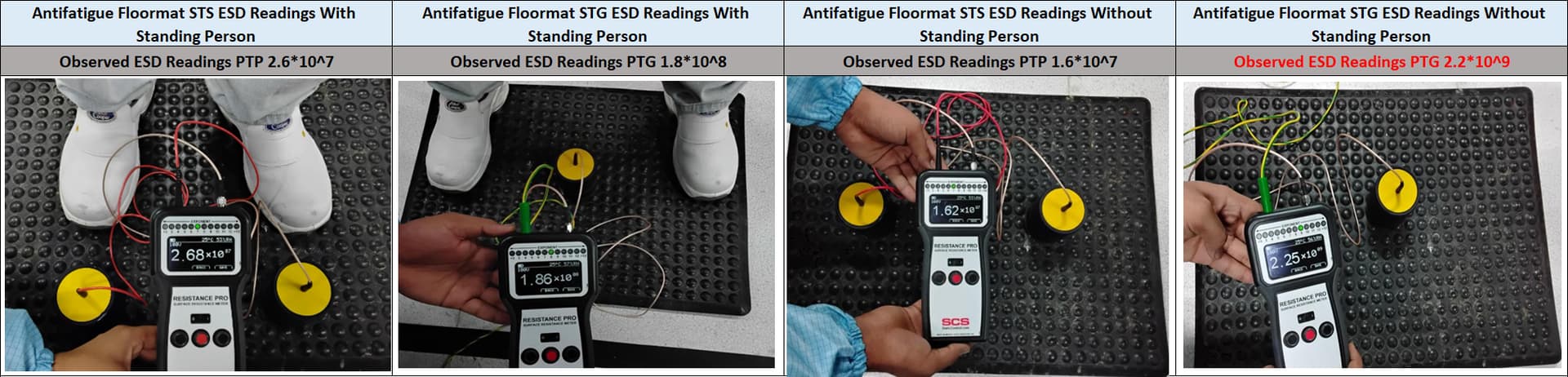
Yes, we have checked the readings. For PTP, the observed resistance values are in the range of 10⁵ to 10⁶ ohms, which are within the required range.
However, for PTG, we observed that the resistance reading is approximately 10⁹ ohms when the measurement is taken without an operator standing on the mat.
Interestingly, when the operator stands on the mat during the PTG measurement, the resistance reading coming up to 10⁷ ohms.
Greetings of the day from India to all the members on the forum
Rahul Sir,
1.Could you please share few photos while taking the measurements? ( with the person standing on the mat and without the person standing on the mat)
2.How is the mat grounded ?
( separately with a copper strip or a wire or placing on the grounded ESD floor )
3.Is the volumetric resistance of this anti fatigue mat checked ?.
4. What is the procedure that the supplier has suggested for grounding of these anti
fatigue mats ?
However, as you have mentioned that when the operator stands it is with perfect Rtg, it is good and it is essential for an effective static dissipation when the operator is at work standing on these mats.
Looks like the mats are using the ESD floor as the grounding path (i.e. there is no separate grounding cord or strip). It also appears that what is happening is when the operator stands on the mat, it makes better contact to the floor, thus giving lower resistance readings. If you need to improve this, you could try to clean the floor or mat. You could also wax the floor under the mat.
Another thing of note is that when you do compliance verification testing per ESD TR53, it says in section 5.0 “Compliance verification of the ESD control item should be performed where the electrostatic discharge sensitive (ESDS) item is likely to reside or to be handled in the process. The intent is to assess the as-found condition of the ESD control item being verified.” Since an operator would only use the mat for grounding himself while standing on it, I think you could make the argument that a person standing on the mat is a typical as-found or as-used condition and write your testing process to include someone standing on the mat. Before you choose to do this, you may want to verify the total system to ground is also under 10^9 ohms (i.e. someone holds an electrode like in ANSI/ESD STM97.1 and you measure the total system resistance through a person, their footwear, the mat and the ESD flooring). Thanks
SarbanR
this is a classic interface contact resistance issue rather than degradation of the mat bulk material, supported by stable good PTP readings.
This situation requires a particular focus on confirming the grounding condition
No one is standing:high unloaded PTG comes from poor internal layer-to-layer contact caused by mat flatness issue and micro air gaps.
Someone is standing:the grounding path relies entirely on contact between mat bottom and underlying ESD floor, which is highly load-dependent.
A few practical recommendations:
Before cleaning or waxing, inspect mat underside and floor surface for dust, flux residues or embedded debris. These contaminants easily create an insulating thin film at the contact interface
According to ESD TR53 and ANSI/ESD STM97.1 full system resistance test is mandatory to validate the complete discharge path (operator-footwear-mat-ESD floor to ground), not just mat PTG alone
Special conductive wax and cleaning solution specifically for ESD must be used; ordinary floor wax and cleaning solution will reduce the ESD performance.
Long-term risk reminder: Grounding via indirect contact with ESD floor has inherently unstable contact resistance. Even if it passes loaded testing, periodic monitoring will be required, and adding dedicated ground snaps would be a more robust permanent solution.
Greetings of the day from India , to all the members on this forum platform
Mr. Rahul ,
Thank you for sharing the photographs and I apologize for seeing it late as I was busy with some CV audits tour for the past 4 days .
In both of my earlier postings I had sought some information as well suggested with few suggestions to the best of my knowledge capacity .
But, unfortunately I did not get the clarification on those points but only got the photos which I had sought of course.
When I see the replies of our ESD Expert Mr. Andy and our co member of the Forum Mr. Lan Snow , my queries and suggestions are also almost parallel to their opinion and suggestions .
Anyway , once again I wish put in my views to enjoy the topic in discussion on a healthy knowledge sharing basis for which ESDA has provided this wonderful platform.
Normally any ESD safe surface with inherent ESD properties shall have a good P -P resistance in the range less than E7 ohms even in the ambient conditions which is normally 30-60 Rh%@ Temperature 20-26 degree C. ( Since 2007 neither of the two global standards specify any environmental conditions when the EPE is in use )
However, to get a precise Rtg there should be a ground path. In my first post I have sought clarification on the same and alternatively have suggested some way to ground the Anti fatigue ESD safe mat used by you.
3.As our Andy Sir suggested ( ** similar to the suggestion by our ESD Guru JK sir on seating system grounding issue few weeks before** ) , I too endorse his opinion “” Since an operator would only use the mat for grounding himself while standing on it, I think you could make the argument that a person standing on the mat is a typical as-found or as-used condition and write your testing process to include someone standing on the mat” and, further what Andy Sir has mentioned is mentioned already in my earlier postings.
4.I also endorse the opinion/ suggestion no 2 of our co member Mr. Lan Snow which is recommended by Andy Sir and as well as in my earlier postings.
However, I would rather avoid recommending usage of any wax but recommend usage of water soluble non ammonia based ESD surface cleaning solvent for mopping of either an ESD safe floor or a work surface at regular frequency so that it would influence to maintain consistency of the P-P and Rtg of the ESD floor or any work surface.
6.In the anti fatigue ESD mats ( of course I have neither seen nor tested anywhere in my customers place till date ) the problem in the Rtg measurement could be due to the air gaps in the bubbles as mentioned by Mr. Lan-Snow .
Overall I suggest you to try out my few suggestions in my earlier postings and am of the opinion that it would satisfy you, per the standard requirements.
Please let me have your feedback.
Thank you
With regards
PS: In you earlier posting on walking voltage less than 50v , you have mentioned that you need to discuss on the ESC floor. Please let us connect on mail individually and see how best I can support your expectations with my little knowledge and experience.