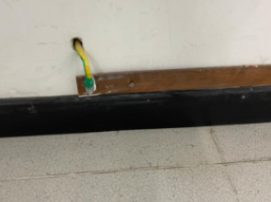
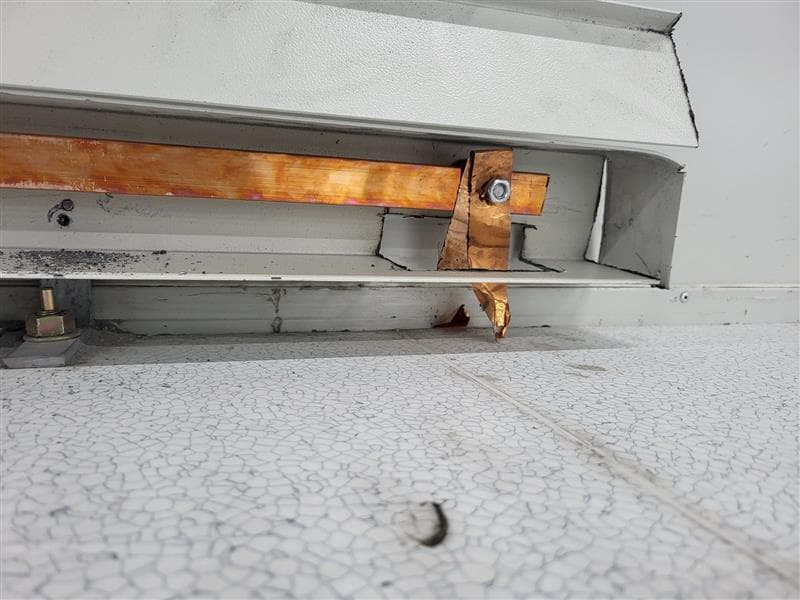
We have installed ESD dissipative tiles in the new plant, and a separate ESD and electrical earth pit has been installed outside the factory.
Currently, we have connected the ESD earth pit to the ESD flooring copper strips using a grounding cable. However, there is a risk of wear and tear of these copper strips, which may lead to disconnection over time.
We request your support to confirm whether the floor grounding method/process we are currently following is correct.
Kindly review and advise if any corrections are required. Also, please suggest the best method for ESD floor grounding to prevent disconnection issues.
Greetings from India to all .
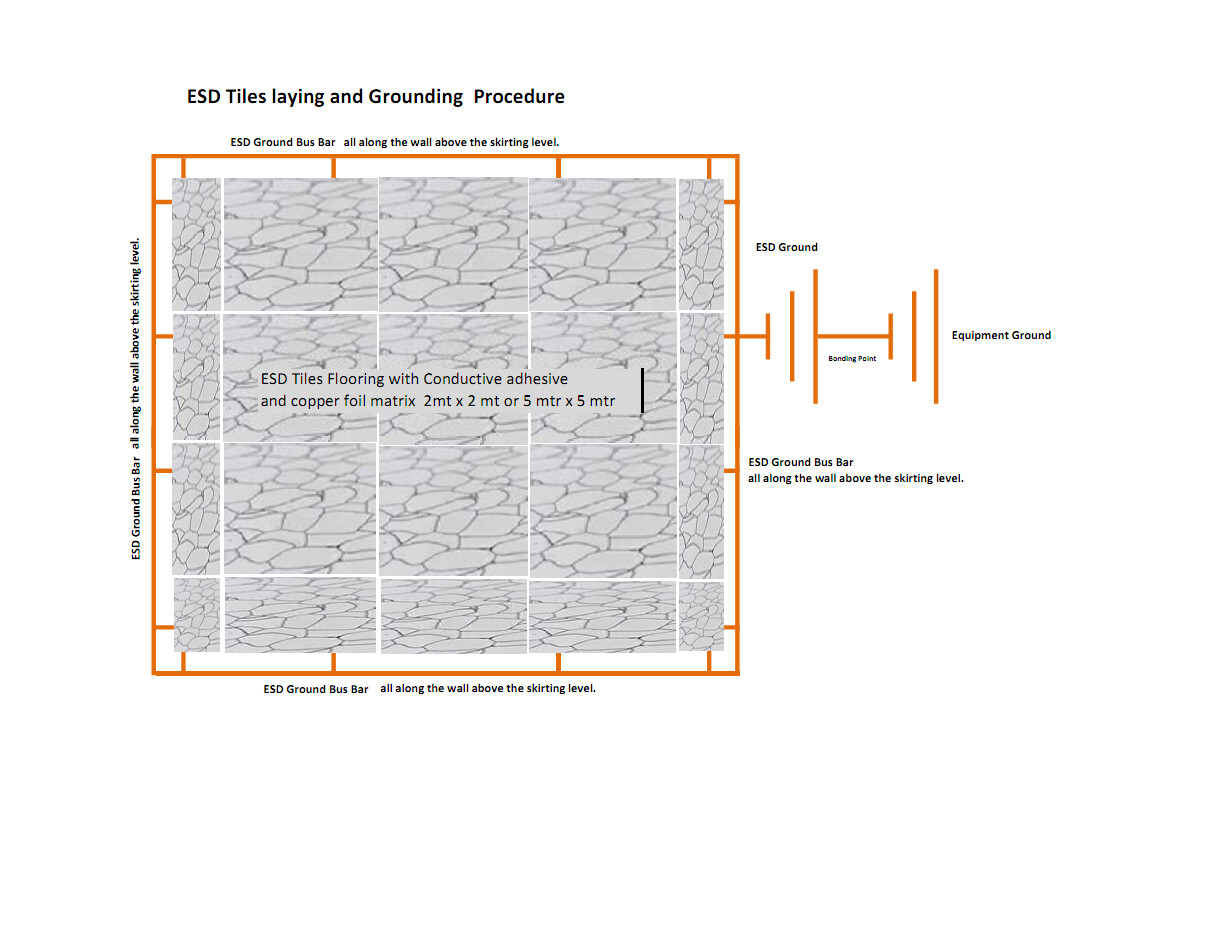
I suggest the below mentioned procedure to my customers here in India in which case the floor will be connected at multiple points to the Bus strip of the ESD earth which is further connected to the equipment ground .
This way you will have multiple points to check the Rtg from any point on the floor and further multiple connections to the bus strip ensures guarantee of the ESD safe floor connected to the ESD ground at one or the other point in case of any disconnection at one point .
I hope this information may be of some assistance to you
A recommended method is to create a bonded, low-impedance equipotential grounding system for the ESD flooring, rather than treating the ESD earth and electrical earth as completely separate, unconnected grounds.
Here is an approach that has worked for me.
Use a dedicated ESD grounding network for the tiles
Install the ESD dissipative floor exactly as the flooring manufacturer specifies.
Connect the flooring to a dedicated ESD grounding point / ground bus using the approved grounding hardware:
copper grounding strip or tape,
floor grounding plates or grounding terminals,
conductive adhesive or grounding connectors as specified by the tile system.
The grounding points should be distributed as required by the floor area and product resistance requirements.
Bond the ESD earth to the electrical protective earth
The ESD earth pit should ultimately be bonded to the building’s protective earth/electrical earthing system at a controlled single point or through the facility grounding network.
Do not leave the ESD pit floating or isolated from the electrical earth unless a qualified engineer has designed a special system for a specific reason.
Do not use separate “independent” earth pits without bonding
If you have:
one ESD earth pit and
one electrical earth pit,
they should generally be interconnected and equipotentially bonded.
Separate earths can develop different potentials, which can create:
unsafe touch voltages,
ground loops,
poor ESD performance,
nuisance failures in sensitive equipment.
Maintain equipotential bonding throughout the area
Bond all conductive or dissipative items in the workstation area, such as:
floor,
benches,
racks,
wrist strap grounds,
equipment frames,
conductive seating,
metallic fixtures, to the same ESD grounding system.
Verify resistance and continuity after installation
Test and document:
floor-to-ground resistance,
point-to-point resistance,
continuity of grounding connections,
resistance to earth,
and compliance with the flooring and ESD program standards.
Practical installation summary
A common compliant arrangement is:
Install dissipative tiles per manufacturer instructions.
Install copper grounding tape/strips or floor grounding plates under or at designated points.
Connect those to an ESD ground bus.
Bond the ESD ground bus to the building protective earth/electrical earth.
Test the system and document compliance.
Important caution
Because this involves both personnel safety grounding and ESD control, the final design should be reviewed and installed by:
a licensed electrician, and
an ESD control specialist or flooring manufacturer’s technical representative.
As I was busy with some compliance verification audit , could just post the the drawing I had.
Thanks to our ESDA expert Matt Sir for a detailed description .
Good day to all