We have observed a concern during our recent Epoxy ESD floor testing. When we move the test blocks by even a few inches, the resistance readings change significantly (in some cases, go out of specification), where the readings shift from within the acceptable range (10⁵ ohms) to above 10⁹ ohms after repositioning the probes slightly. Could you please confirm if this type of behavior is normal for this flooring system? What might be causing such drastic variation over a small distance?
Should be consider Average to verify the conformance or individual reading should pass the test?
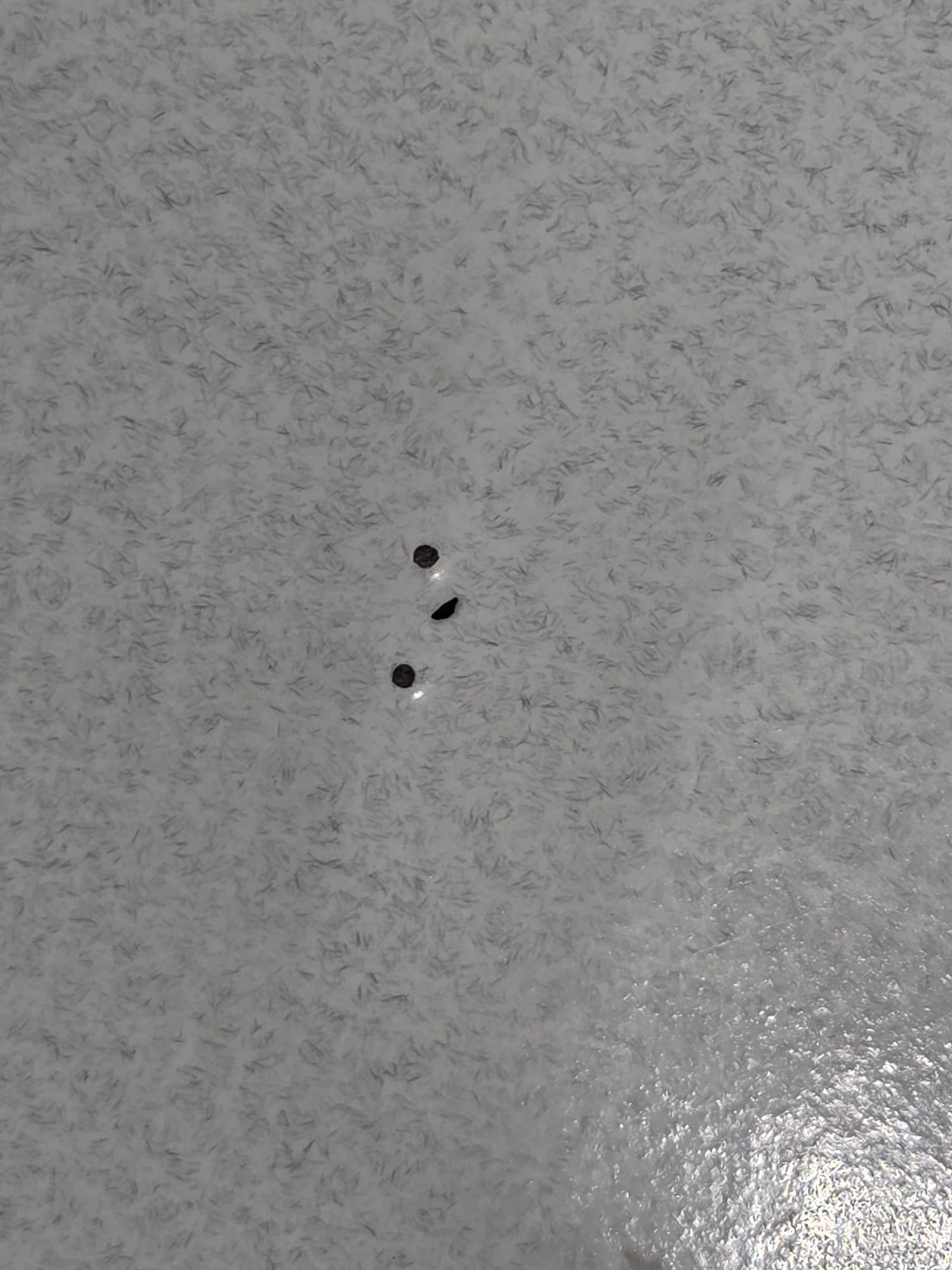
We are also noticing some physical holes on the floor surface. There are small holes forming in certain areas, along with visible bubbles on the surface… I have attached some pictures for your reference. What could be causing these bubbles and surface holes? Are these considered normal ?
ESD protection on the whole isn’t a very exact science. It’s the general picture that is important. The purpose of the ESD flooring is to create a conductive path from the person through the soles of the shoes to the ground. So as long as you don’t find high resistance areas big enough that a person can stand in them, you should be good.
Hi!
We had the same issue (high resistance in patches) and it was caused by an erroneous application of wax. The wax specified that it needed to be shaken prior to application and it wasn’t being properly mixed. I don’t know precisely if you use wax, but maybe it had to do with the application of the epoxy flooring.
Do you have a Qualification report after installation?
Manpreet,
I agree with Aldo that it could be a mis-application of the epoxy wax. Some other possibilities could be:
- The probes got dirty between measurements which could cause higher resistance readings. Consider cleaning the probe between each measurement.
- The flooring will wear out in higher traffic areas. If the higher resistance measurements are in the higher traffic areas, you should consider re-waxing more often
I have seen anomalies with the probes on epoxy floors. If they are just small patches of high resistance then is should not be a problem. If there are larger areas that could indicated a problem with the epoxy. Have you done the body voltage test (walking test)? That is a good indication of the performance of the footwear with the floor.
I don’t have enough experience to comment on the bubbles or holes in the floor. I am not sure what caused that.
Greetings of the day from India to all the members on this forum.
Of late, I am joining this conversation .
Already our ESDA Experts JK Sir & Andy Sir and our other ESD experts have shared enough suggestions. As a passion in this field I too wish to pen down few lines here .
1.You have mentioned that you observed a concern during your recent Epoxy ESD floor testing. It means;
a.Is it a old floor ?
b.Was the test conducted earlier to the present test ?
c.Was the earlier test fully satisfactory ?
2.In the last para you have stated that there are small holes forming in certain areas, along with visible bubbles on the surface…
Was the floor surface plane and there were no bubbles when it was laid ?
Normally this kind of issues does come up in case of newly laid flooring systems due to air gap between the top coat of the solvent and the bottom layer and due to uncontrolled dust & dirt particles intervention during installation job .
3. What was the Rh level maintained in the room during the testing ?
Further;
1.Even a micron of dust at times gives room for variation on the surface resistance from location to location on the same floor .
2.Even a micron of dust on the surface of the conductive rubber at the bottom of the testing probes gives room for variation on the surface resistance from location to location on the same floor .
3. Even worn out conductive rubber at the bottom of the testing probes gives room for variation on the surface resistance from location to location on the same floor .
4. Since it is an emulsion coating on epoxy floor at times the coating thickness may vary a bit and could make a difference in the readings as the bottom layer below the top dissipative coat is a conductive primer layer .
However , as per our colleague [Insula] said ; “The purpose of the ESD flooring is to create a conductive path from the person through the soles of the shoes to the ground.” So, as long as your measured resistances and as per our ESDA expert JK Sir has said " Body voltage test (walking test) which is mandatory and a good indication of the performance of the footwear with the floor." are within the acceptable limits per ANSI ESD S 20 20 or IEC 61340-5-1 , then there is no issue and these small holes are bubbles will not be of any hindrance to your activities .
However; as a word of precaution use water soluble ESD surface cleaning concentrate to clean the floors to maintain the consistency of the ESD parameters . So also, ensure to maintain the Rh at 25-65% and temperature 20-26 ^C for an effective ESD control program.
Thank you .